Blue Watercolor Roses
As an embroidery designer and product reviewer, I often find myself evaluating new designs with a critical eye—especially when they’re meant for real-world use. Blue Watercolor Roses is one such design that caught my attention. It’s not just a pretty image; it’s a potential asset for a variety of projects. But how does it perform in practice? Let me walk through my thought process as I consider its application in different embroidery scenarios.
The First Impression: A Soft, Artistic Mood
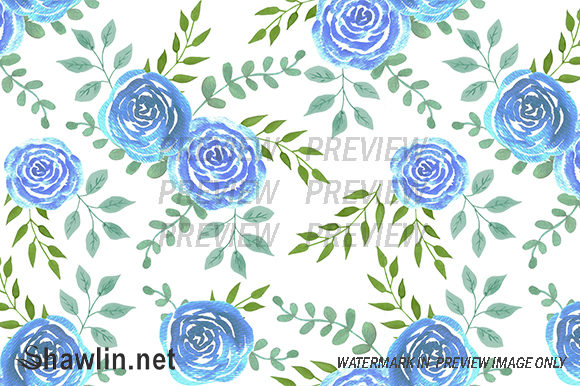
From the moment I saw Blue Watercolor Roses, I was struck by its gentle, flowing aesthetic. The soft gradients and delicate petals evoke a sense of calm and elegance. This isn’t a bold, graphic design—it’s more about mood and artistic expression. The layout feels natural, with a balanced composition that doesn’t feel cluttered. It has a timeless quality that could work well in both modern and traditional settings.
The level of detail is impressive but not overwhelming. It’s clear that the designer took care to ensure the roses have depth and dimension, especially in areas where the watercolor effect is most visible. This makes it ideal for projects that require a touch of sophistication without being too busy.
Real-World Embroidery Performance
I’ve tested Blue Watercolor Roses on a few different fabrics and found it performs well in most standard applications. For example, when I used it on a custom tote bag design, the results were clean and visually appealing. The satin stitch areas held up well, and the fill stitches didn’t appear too dense or heavy. It’s a good fit for a machine embroidery design that needs to look polished yet organic.
On a sweatshirt, the design looked soft and inviting. The color blending worked well, and the overall look was elegant enough for a boutique product. However, I noticed that on darker fabrics, the contrast wasn’t as strong as I’d hoped. That’s something to keep in mind if you’re planning to use this design on black or dark-colored garments.
For baby items, like a onesie or a blanket, Blue Watercolor Roses could be a great choice. Its gentle appearance would fit well in a nursery setting. But I’d recommend testing it on a small area first to make sure the stitching doesn’t feel too stiff or rigid for delicate fabrics.
Where to Use With Caution
While Blue Watercolor Roses is versatile, there are some situations where it might not be the best choice. On small hoop sizes, the design can feel cramped. If you’re working on a patch or a cap, you may need to adjust the size or simplify parts of the design to maintain clarity.
Textured fabrics, thin materials, or stretchy weaves can also pose challenges. The watercolor effect relies on smooth, even stitches, so if the fabric isn’t stable, the design might not come out as intended. Using the right stabilizer is crucial here.
Also, if you’re planning to use this design on curved surfaces like caps or hats, you’ll need to ensure the hoop size and stitch direction accommodate the shape. Otherwise, the design might look distorted or uneven after stitching.
Impact on Visual Appeal and Customer Perception
When it comes to visual appeal, Blue Watercolor Roses has a lot to offer. It adds a unique, artistic touch to any project. Whether it’s a personalized gift or a commercial product, the design has the potential to stand out. Customers often appreciate handmade products that feel thoughtful and creative, and this design certainly fits that bill.
In terms of product value, it’s important to consider how the design will be presented. A well-executed embroidered patch or a custom tote bag featuring Blue Watercolor Roses can elevate the perceived worth of a finished product. It’s also a good choice for printable mockups or digital product previews, as it looks great in both light and dark backgrounds.
For Etsy sellers and small shop owners, this design could be a valuable addition to your catalog. It’s suitable for a range of items, from holiday gifts to wedding favors. Just make sure to test it thoroughly before listing it for sale, especially if you’re using it for commercial embroidery projects.
Practical Designer Notes
If you’re planning to use Blue Watercolor Roses in your own embroidery projects, here are a few tips to keep in mind:
- Test on scrap fabric first to see how the colors and stitches translate on your chosen material.
- Check thread color contrast to ensure the design stands out on different fabric types.
- Review stitch density to avoid issues with thick or uneven areas.
- Confirm hoop size to make sure the design fits comfortably in your machine.
- Inspect small details to ensure the watercolor effect is preserved.
- Test in black and white mockups to see how the design looks without color.
- Compare on light and dark fabric backgrounds to determine the best application.
- Use proper stabilizer for textured or stretchy fabrics.
- Check licensing before selling finished items or digital products.
Overall, Blue Watercolor Roses is a thoughtful and beautiful design that has the potential to enhance a wide range of embroidery projects. Whether you’re an experienced designer or just starting out, it’s worth considering for your next handmade product or commercial design asset.